
7 Best Practices for Asbestos and Lead Material Disposal in North Florida
1. Understanding Asbestos Materials and When Abatement is Required
Asbestos and lead-based materials pose serious health risks when disturbed during renovation or demolition work. Many contractors and homeowners in North Florida underestimate the complexity of handling these hazardous substances. Without proper identification, removal, and disposal protocols, you expose your team, future occupants, and the environment to contamination that can cost tens of thousands in remediation later.
This guide walks you through the essential practices for safely managing asbestos and lead material disposal in North Florida, from initial identification through final facility placement. Understanding these requirements protects your project timeline, your budget, and your legal standing.
Asbestos was used extensively in North Florida buildings constructed before the 1980s. You'll find it in pipe insulation, roofing materials, floor tiles, cement board, drywall joint compound, and spray-applied fireproofing. The mineral's heat resistance and strength made it attractive to builders, but its microscopic fibers cause mesothelioma and lung disease when inhaled.
The key question: does your project require abatement? If you're only moving materials without disturbing them, you may not need abatement. However, any renovation, demolition, or disturbance of suspected asbestos requires professional assessment. A certified industrial hygienist must sample the material and confirm its presence through laboratory analysis. This isn't optional if you suspect asbestos exists in your work area.
Florida recognizes two categories of asbestos work:
Friable asbestos (crumbles easily, releases fibers readily): requires full abatement by a licensed contractor
Non-friable asbestos (tightly bound, less likely to release fibers): may allow encapsulation or careful removal under specific conditions
Your contractor must have a current Florida Department of Business and Professional Regulation (DBPR) license to perform abatement work. Without this credential, any removal work violates state law.
Actionable takeaway: Before any demolition or renovation begins, hire a certified asbestos inspector to sample suspect materials. This single step prevents costly legal exposure and ensures your project follows proper protocols from day one.
2. Lead-Based Paint Identification and Professional Removal Standards
Lead-based paint in North Florida homes built before 1978 creates particular challenges because it's far more common than asbestos. Federal law classifies any home built before this date as potentially containing lead paint, and the EPA requires specific containment and cleanup standards whenever you disturb it.
Lead dust poses extreme risks to children and pregnant women, even at low exposure levels. Unlike asbestos, lead doesn't require lab confirmation to trigger regulatory requirements. Simply working on a pre-1978 structure automatically invokes EPA and state lead renovation rules.
Proper lead removal includes these steps:
Containment (plastic sheeting, negative pressure ventilation) to prevent dust spread
HEPA-filtered vacuum capture of all dust and debris
Wet cleaning of work surfaces and surrounding areas
Disposal at a certified facility licensed to accept lead-contaminated materials
Many contractors mistake lead paint disposal for ordinary construction waste disposal. It isn't. Lead-contaminated debris requires tracking documentation and delivery to specific licensed facilities equipped to handle hazardous materials.
Florida's Department of Environmental Protection (DEP) enforces these requirements, and violations carry penalties up to $5,000 per day of non-compliance.
Actionable takeaway: If your project involves any pre-1978 structure, treat lead management as a separate line item in your budget and timeline. Partner with contractors certified in lead-safe work practices (RRP certified by EPA), not general demolition crews.
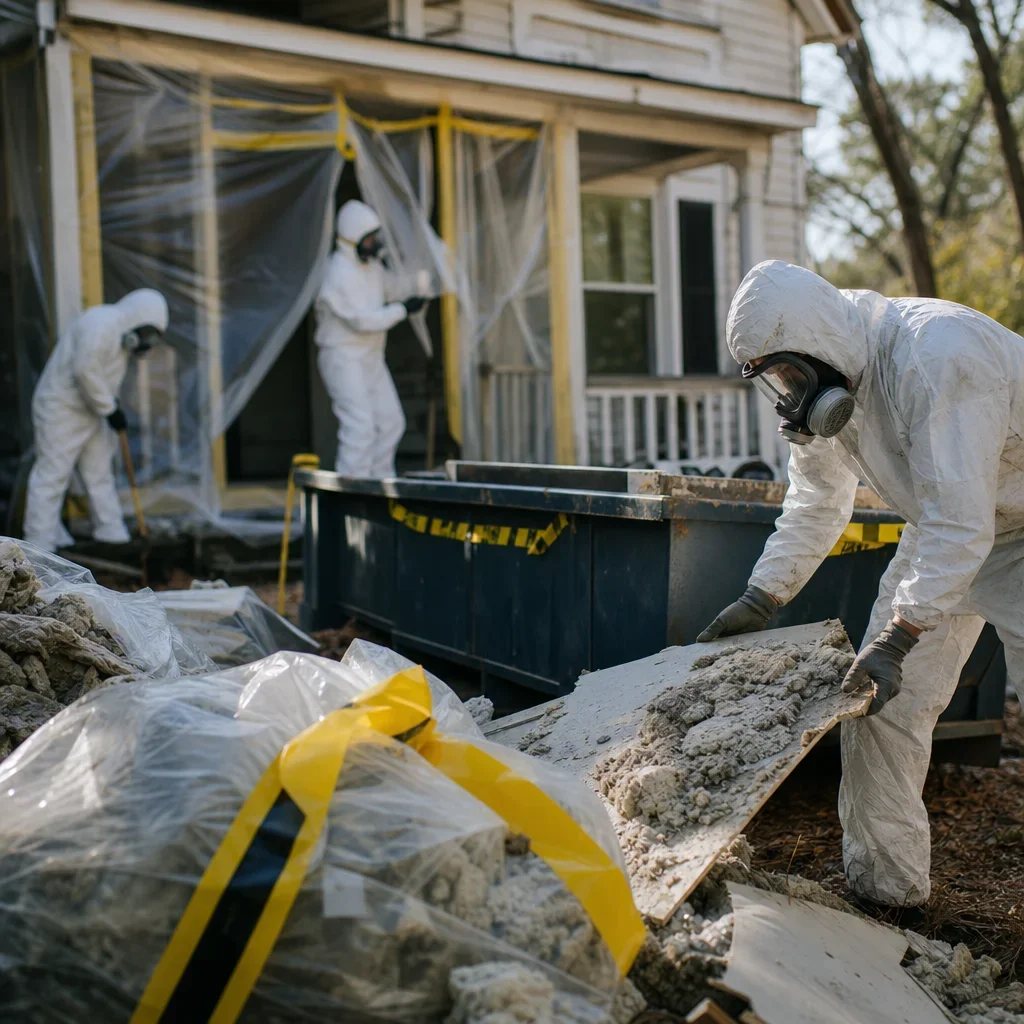
3. How Certified Abatement Contractors Differ from Standard Junk Removal Services
This is where many projects go sideways. A junk removal company can haul old furniture and construction debris. A certified asbestos or lead abatement contractor is an entirely different service category with specific licensing, insurance, and legal authority.
Standard junk removal services lack the credentials to handle hazardous materials. They can't legally touch suspected asbestos or lead-contaminated debris. If a general contractor or "affordable" junk removal outfit removes asbestos-containing materials, you're liable for contamination, and the debris likely ends up in a regular landfill rather than a hazardous waste facility. This creates an enforcement nightmare.
Certified abatement contractors maintain:
State DBPR licensing for asbestos abatement (Class A, B, or C credentials depending on scope)
EPA RRP certification for lead-safe work practices
Industrial hygiene or equivalent air monitoring qualifications
Liability insurance covering hazardous material work
Chain-of-custody documentation for contaminated debris
The cost difference is significant. A certified abatement contractor costs more upfront because they handle compliance, air monitoring, proper disposal, and documentation. But this investment prevents project shutdowns, regulatory fines, and future liability claims that dwarf the initial abatement fee.
Actionable takeaway: When you receive a quote for renovation or demolition work, verify that hazardous material removal is handled by separately licensed abatement firms, not bundled into a general contractor's scope. Request DBPR license verification and proof of current E&O insurance.
4. The Legal Requirements for Hazardous Material Disposal in Florida
Florida's regulatory framework for asbestos and lead disposal is stricter than federal baseline requirements. The state requires:
Asbestos-specific rules:
Licensed contractor performs abatement work only
Work notification to the Florida DEP at least 10 days before start (for friable asbestos projects)
Air monitoring during and after removal
Waste certification as asbestos-containing material (ACM)
Disposal only at DEP-approved facilities
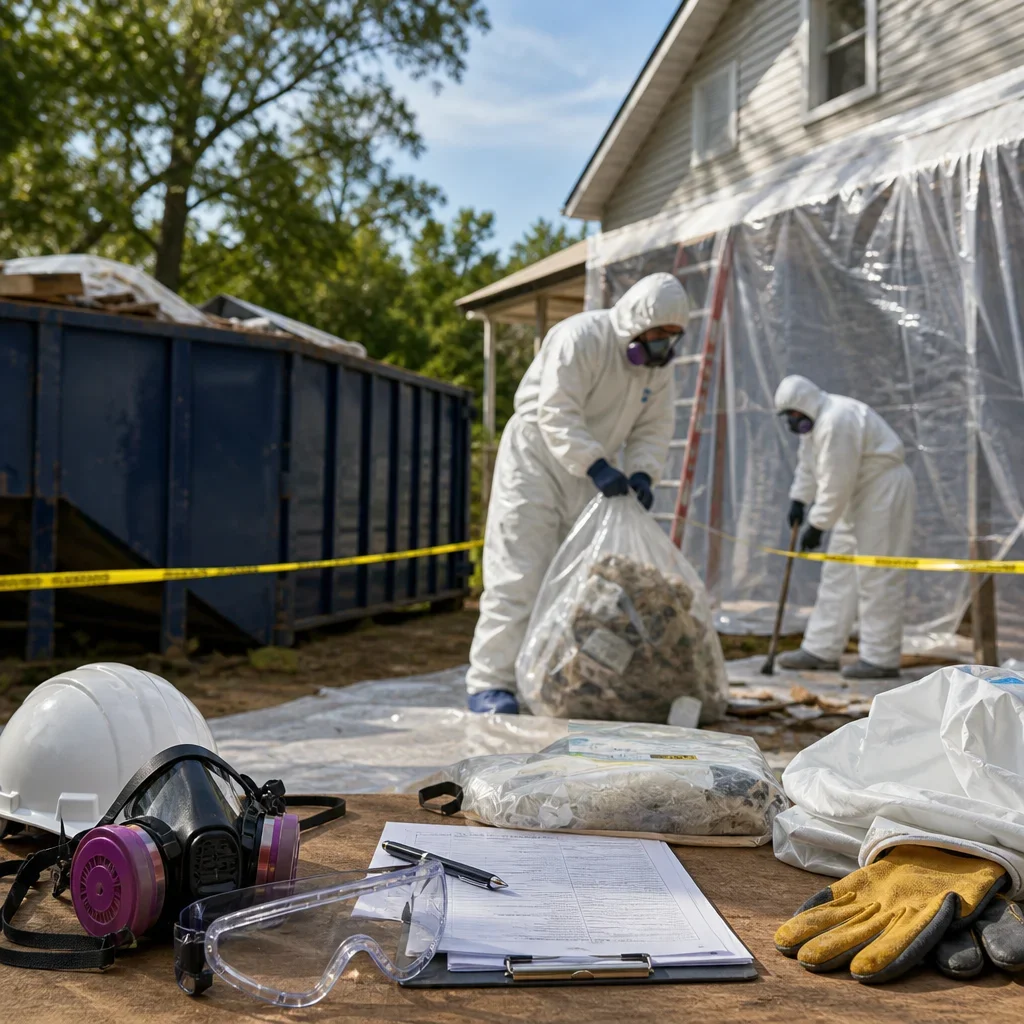
Lead-based paint rules:
Pre-renovation disclosure to property owner
EPA RRP certification for all contractors disturbing lead paint
HEPA containment and controlled cleanup procedures
Certified waste disposal at licensed hazardous waste facilities
Both categories require documentation and record-keeping. You must maintain copies of certifications, disposal records, and compliance reports for a minimum of three years. If your project involves renovation or demolition in North Florida, this paper trail becomes part of your project liability protection.
The EPA and Florida DEP coordinate enforcement, and both agencies conduct surprise inspections on active renovation sites. Non-compliance penalties include:
EPA fines: up to $16,000 per violation
Florida DEP fines: up to $5,000 per day
Civil liability claims from affected occupants
Project work stoppage orders
Actionable takeaway: Request a compliance checklist from your abatement contractor at the project start. This document should outline every notification, monitoring, and disposal step required. Use it as your project tracking tool, not an afterthought.
5. Choosing Licensed Disposal Facilities for Contaminated Debris
Not every landfill accepts asbestos or lead-contaminated materials. You cannot simply haul these waste streams to your local construction debris drop-off and expect proper handling. Contaminated materials require specialized disposal facilities with DEP licensing and proper containment infrastructure.
In North Florida, licensed hazardous waste disposal facilities are limited. Your abatement contractor should already have relationships with approved facilities and handle the logistics. However, as the project manager, you should verify that the final destination facility holds current DEP authorization. This step protects you if future environmental audits question waste disposal practices.
Red flags that indicate improper disposal:
No chain-of-custody documentation provided
Vague descriptions of where debris was taken
Disposal at a regular construction landfill
No facility license numbers or contact information
Prices significantly below market rates (suggests illegal dumping)
Ask your disposal partner to provide the facility's DEP license number and authorization letter. Contact the facility directly to confirm acceptance of your specific waste stream. This transparency ensures proper handling and creates defensible records if regulatory questions arise later.
Actionable takeaway: Before work begins, obtain written confirmation from the disposal facility that they accept the specific materials you're removing. Request a receipt or certification upon delivery that documents what was accepted and how it was processed.
6. Coordinating Your Project Timeline with Abatement and Debris Removal
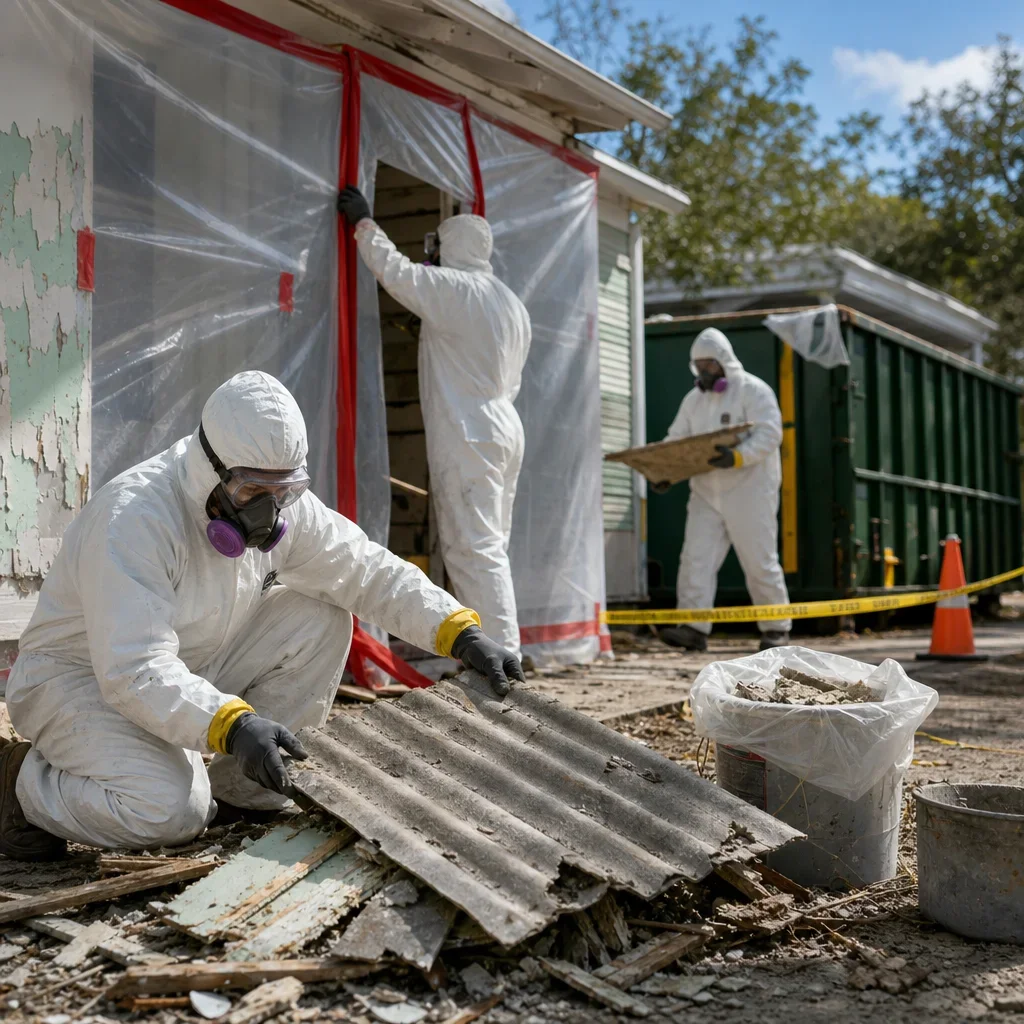
Asbestos and lead removal adds 2-4 weeks to a standard renovation timeline. Many contractors underestimate this, leading to project delays and budget overruns.
The typical sequence includes:
Pre-project inspection and material sampling (3-7 days turnaround for lab results)
Regulatory notifications and permits (10-14 days for asbestos work notifications)
Abatement contractor mobilization and containment setup (2-3 days)
Material removal and air clearance testing (5-14 days depending on scope)
Final cleanup and waste transportation (3-5 days)
Disposal facility acceptance and documentation (1-2 weeks for paper trail completion)
If you skip or compress these steps, you risk incomplete work, failed air testing, and regulatory enforcement. Failed air clearance tests force crews to return and repeat work, extending the timeline further.
Build this timeline into your project schedule before breaking ground. Communicate the extended timeline to clients upfront so expectations align with regulatory reality, not wishful thinking.
Actionable takeaway: Create a separate Gantt chart or project timeline document that shows hazardous material work as its own phase, distinct from general construction. Share this with all stakeholders so everyone understands why the project can't move faster than regulatory compliance allows.
7. Why TrashHelp Partners with Certified Abatement Professionals for Complete Solutions
At TrashHelp, we understand that hazardous material disposal requires specialized expertise beyond standard junk removal services. Our approach is straightforward: we work exclusively with licensed asbestos and lead abatement contractors rather than attempting to bundle hazardous material work into our standard removal services.
Here's why this partnership model protects your project:
We maintain relationships with DEP-approved abatement firms across North Florida. When you contact us about a renovation or demolition project involving suspected asbestos or lead materials, we connect you with the right certified contractor immediately. This eliminates the confusion of finding qualified specialists on your own and ensures your project doesn't stall because the wrong contractor started the work.
Our role includes providing post-abatement debris removal and hauling once materials have been properly isolated, documented, and certified for transport. We operate contractor dumpster rentals that accept non-hazardous construction waste, giving you a complete solution: certified abatement for contaminated materials plus efficient removal and disposal for the remaining debris.
Many contractors attempt to save money by handling hazardous material work themselves or using under-qualified crews. This approach creates liability that dwarfs any short-term savings. We position ourselves as your compliance partner, not just a debris hauler. Our 14+ years in North Florida's construction landscape means we've seen projects derailed by improper hazardous material handling. We're built to prevent that from happening to your work.
When you work with us, you get transparent upfront pricing without hidden fees, 24-hour dispatch availability for urgent situations, and documentation that holds up to regulatory scrutiny. We don't cut corners on compliance because your project success depends on it.
Next step: If your North Florida renovation or demolition project involves pre-1978 structures or suspected asbestos materials, contact us for a free hazardous material assessment and abatement referral. We'll connect you with certified contractors and coordinate the complete removal solution so your project stays on schedule and within budget.