
Household Hazardous Waste Disposal: What Contractors Can't Throw Away
Why Hazardous Waste Disposal Matters for Your Project Timeline
Managing waste on a construction or renovation site involves more than just renting a dumpster. Contractors regularly encounter materials that pose serious environmental and health risks if disposed of improperly. Understanding what qualifies as hazardous waste and how to handle it correctly protects your project timeline, your team, and your liability exposure.
We've worked with North Florida contractors for over 14 years, and hazardous waste disposal remains one of the most frequently misunderstood aspects of project cleanup. This guide covers what you need to know to stay compliant and keep your jobs running smoothly.
Improper hazardous waste handling can derail your entire schedule. When a job site inspector discovers prohibited materials in a standard dumpster, work stops. Fines accumulate. Remediation costs balloon. What should have taken days to resolve stretches into weeks of compliance headaches.
Beyond regulatory enforcement, hazardous materials pose real safety risks to your crew. Exposure to paint fumes, solvent vapors, or pesticide residue can cause acute health effects ranging from respiratory irritation to chemical burns. Long-term exposure carries even greater consequences. When you dispose of hazardous waste correctly, you protect both your team's health and your project schedule.
Proper disposal also demonstrates professional accountability to your clients. Homeowners and property managers increasingly expect contractors to manage waste responsibly. Showing that you handle hazardous materials compliantly builds trust and protects your reputation.
Start by identifying hazardous materials on your site before waste disposal day arrives. This single step prevents rushed decisions that lead to compliance violations.
Common Prohibited Items: Paint, Solvents, and Pesticides
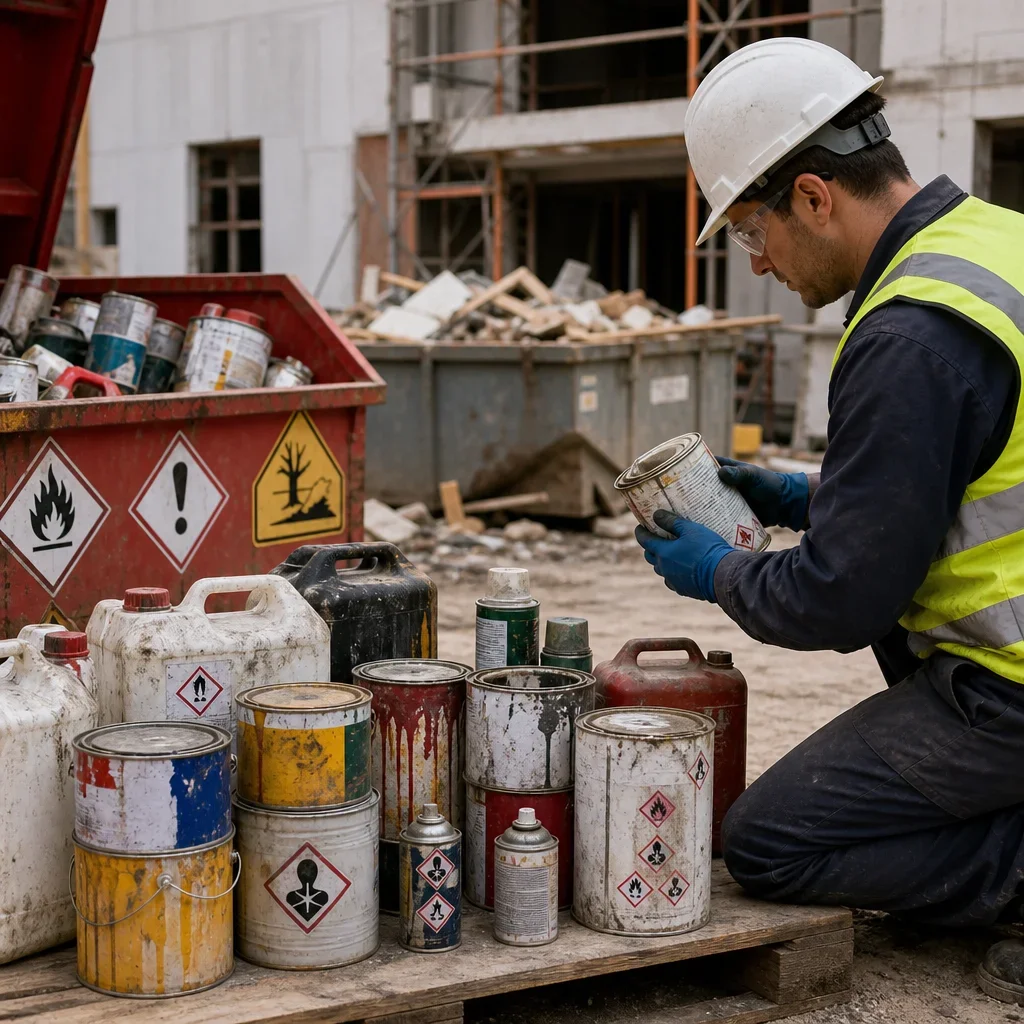
Paint tops the list of materials we encounter that don't belong in standard dumpsters. Latex paint, oil-based paint, primers, stains, and varnishes all contain chemicals that leach into soil and groundwater when sent to landfills. Even dried paint cans pose contamination risks.
Solvents used in construction include mineral spirits, acetone, lacquer thinner, turpentine, and degreasing agents. These volatile organic compounds evaporate or seep into the environment, creating air quality and water contamination problems. Contractors often underestimate how hazardous solvents are because they're so common on job sites.
Pesticides and herbicides used for site preparation, landscaping, or pest control contain toxic compounds. Disposal violations involving pesticides carry particularly steep penalties because regulators treat them as serious environmental threats.
Other prohibited materials include:
Batteries (lead-acid, lithium, alkaline)
Fluorescent bulbs and tubes containing mercury
Asbestos-containing materials from older structures
Refrigerants from HVAC systems
Fuel, oil, and diesel
Adhesives and epoxies with hazardous components
Roofing tar and sealants
Each of these materials requires specialized handling. Mixing them into general construction debris creates hazardous combinations that landfills cannot safely process.
Document what hazardous materials you've used during the project. This record helps you arrange proper disposal and demonstrates compliance if questions arise later.
Legal Consequences of Improper Hazardous Waste Handling
Florida's Department of Environmental Protection (DEP) enforces hazardous waste regulations strictly. Violations carry civil penalties ranging from hundreds to thousands of dollars per incident. Criminal charges apply in cases of intentional or grossly negligent violations.
Your business license faces suspension or revocation if you develop a pattern of non-compliance. Insurance carriers may deny claims related to environmental contamination caused by improper waste disposal. Some policies exclude coverage entirely for contractors with hazardous waste violations on record.
Liability extends to property owners and future occupants if hazardous materials leach into groundwater or contaminate soil. You could face third-party lawsuits years after a project concludes. Environmental remediation costs can exceed your original project budget by multiples.
Clients increasingly require proof of compliant waste disposal as a contract condition. Missing this documentation can result in payment holds, disputes, or damage to your professional reputation.
The EPA and state regulators share information about violators. A single violation can affect your ability to bid on government contracts or work with large commercial clients who audit their vendors' compliance records.
Proper disposal upfront costs far less than handling violations after the fact. This isn't just a legal requirement; it's smart business.
Why Standard Dumpsters Cannot Accommodate Hazardous Materials
Standard dumpsters are designed for inert construction debris: wood, drywall, metal, concrete, and similar materials. Their lining, ventilation, and transport methods don't account for chemical containment or safety protocols that hazardous materials demand.
When hazardous liquids mix with construction debris, they can:
Corrode dumpster walls, creating leaks during transport
Emit harmful vapors that affect landfill workers and surrounding communities
Contaminate loads of otherwise recyclable material
React chemically with other debris, creating fires or toxic fumes
Landfills have designated hazardous waste sections with specialized containment systems. Standard dumpsters never reach these areas. When prohibited materials arrive at the landfill in regular construction waste, the entire load may be rejected or quarantined, delaying your project and triggering compliance investigations.
Our standard roll-off dumpsters in 12, 15, 20, and 30-yard sizes work excellently for typical construction debris. They keep your project on schedule and costs predictable. But they're not equipped for hazardous materials, regardless of quantity.
This is precisely why we offer specialized waste management solutions designed specifically for contractors managing hazardous materials.
Our Compliant Waste Management Solutions for Contractors
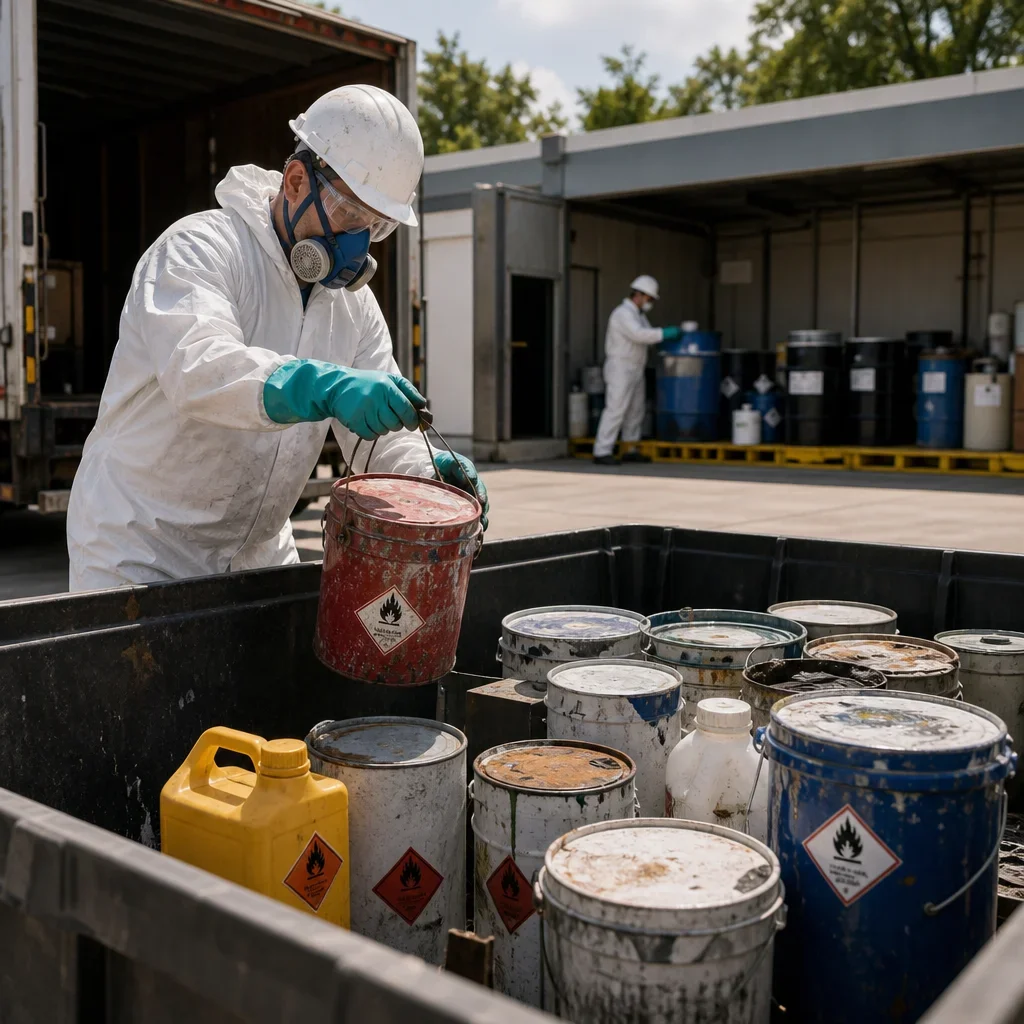
We maintain relationships with licensed hazardous waste processors throughout North Florida. When you work with us, you're not just renting a container; you're gaining access to a complete disposal network that handles compliance on your behalf.
For paint disposal, we arrange pickup and transport to certified facilities that recycle or safely incinerate paint while capturing and treating vapors. Solvent containers receive similar treatment through specialized chemical waste processors. Pesticide disposal follows EPA protocols for agricultural and industrial chemicals.
Our approach separates hazardous materials from general construction debris from the beginning. This prevents contamination of your regular dumpster load and ensures each waste stream receives appropriate handling.
We provide documentation for every hazardous waste pickup. You receive records showing what was collected, where it went, and how it was processed. This paper trail protects you if questions arise during project closeout or future audits.
Our team can walk through your job site before work begins to identify potential hazardous materials and recommend disposal strategies. This consultation prevents surprises and keeps your project planning on track.
How We Handle Hazardous Waste Safely and Responsibly
Safety starts with proper containment. Hazardous materials arrive at our facilities in secondary containers designed to prevent spills. Drums are labeled clearly, stored upright, and kept in designated areas separate from general waste.
Our drivers receive training in hazardous materials handling. They understand load limits, weight distribution, and emergency response protocols. Transport vehicles include spill kits and documentation of contents.
Licensed processors we partner with maintain staff certifications required by Florida DEP and the EPA. Their facilities operate under regular inspection and maintain environmental monitoring systems to detect any contamination during processing.
Incineration of paint and solvents occurs at temperatures exceeding 1,200 degrees Fahrenheit, destroying hazardous compounds and recovering thermal energy. Liquid waste streams receive treatment to neutralize chemical properties before entering water systems. Batteries and electronic waste components are separated into recyclable metals and plastics.
Every step follows a documented chain of custody. You can trace your hazardous waste from pickup through final disposition. This transparency meets regulatory expectations and protects your business.
We treat hazardous waste handling as a critical responsibility, not a routine service add-on. Your compliance depends on it.
Transparent Pricing for Specialized Waste Removal Services
Hazardous waste disposal costs more than standard dumpster rental because the process involves specialized equipment, licensed processors, and regulatory documentation. We don't hide these costs or surprise you with unexpected fees.
Our pricing model is straightforward: you pay a base service fee for hazardous material pickup and handling, plus disposal costs determined by weight and material type. We provide detailed quotes upfront so you can budget accurately and plan project expenses with confidence.
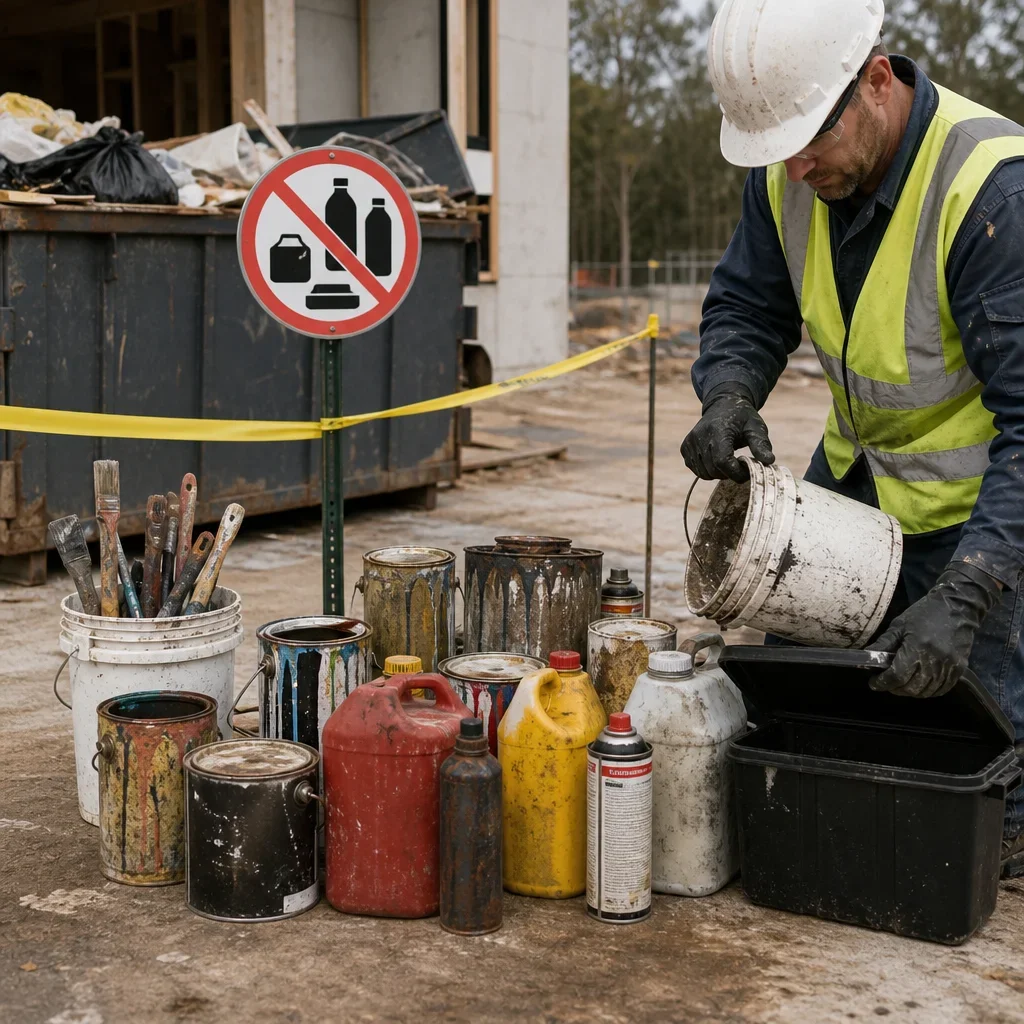
Mixing hazardous and non-hazardous waste increases costs significantly because the entire load requires hazardous-level handling. Separating materials from the start keeps expenses down and processing more efficient.
Volume discounts apply for contractors with multiple projects or ongoing waste streams. We work with commercial clients to establish recurring pickup schedules at predictable costs.
Our 24/7 availability means you can request quotes anytime, day or night, without waiting for business hours. This accessibility helps you manage scheduling and incorporate disposal costs into bids.
Transparent pricing removes the financial uncertainty that makes contractors hesitant about proper hazardous waste disposal. You know what you're paying and why.
Keeping Your Project On Schedule With Proper Disposal
Projects stay on schedule when waste doesn't become a problem. Proper hazardous material handling ensures compliance inspections proceed without delays, work continues without interruption, and final closeout happens as planned.
Coordinating hazardous waste removal alongside your general debris disposal streamlines logistics. Rather than managing multiple vendors and pickup schedules, you coordinate with us for comprehensive waste management. This consolidation reduces phone calls, scheduling conflicts, and coordination headaches.
Advanced planning is your most valuable tool. Identify hazardous materials in your project specifications and budget for their proper disposal before work begins. This prevents mid-project scrambling and allows us to schedule pickups that fit your timeline.
Our grapple truck handles bulky debris alongside specialized pickups for hazardous materials. We can coordinate multiple waste streams in a single visit, keeping your site clean and reducing the number of trucks pulling onto your property.
Storm cleanup, renovation projects, and construction sites benefit from our flexible scheduling. Same-day or next-day service is available throughout North Florida, including Gainesville and High Springs.
When waste management doesn't interfere with your schedule, your team stays productive and your project stays profitable.
Our 24-Hour Dispatch System for Urgent Waste Needs
Construction timelines don't pause for business hours. That's why we maintain 24/7 dispatch availability for quote requests and scheduling. Whether you need hazardous waste pickup tonight or a dumpster tomorrow morning, we respond quickly.
Our dispatch system connects your request to available trucks and personnel in real time. Same-day service is available for most locations throughout North Florida. Urgent needs don't require waiting until Monday morning.
You can request a quote or schedule pickup online at https://www.trashhelpnorthflorida.com/ or by calling us directly. Our availability around the clock means you make decisions on your timeline, not ours.
Documentation is prepared and available immediately after pickup. You don't wait days for records; you have compliance paperwork the same day service is completed. This rapid turnaround supports project schedules and regulatory compliance.
Partner With North Florida's Trusted Waste Removal Experts
Over 14 years, we've developed deep expertise in North Florida's waste management landscape. We understand local regulations, maintain relationships with certified processors, and know how to handle the unique challenges of our region's construction industry.
Our experience managing hazardous waste for contractors across Gainesville, High Springs, and throughout North Florida means you're working with professionals who understand your challenges. We've solved these problems for hundreds of projects.
Your project deserves waste management partners who take compliance seriously and handle logistics professionally. We deliver both.
Contact us today for a transparent quote on hazardous waste disposal services. Let's discuss your project timeline and create a waste management plan that keeps your site clean, your team safe, and your business compliant.